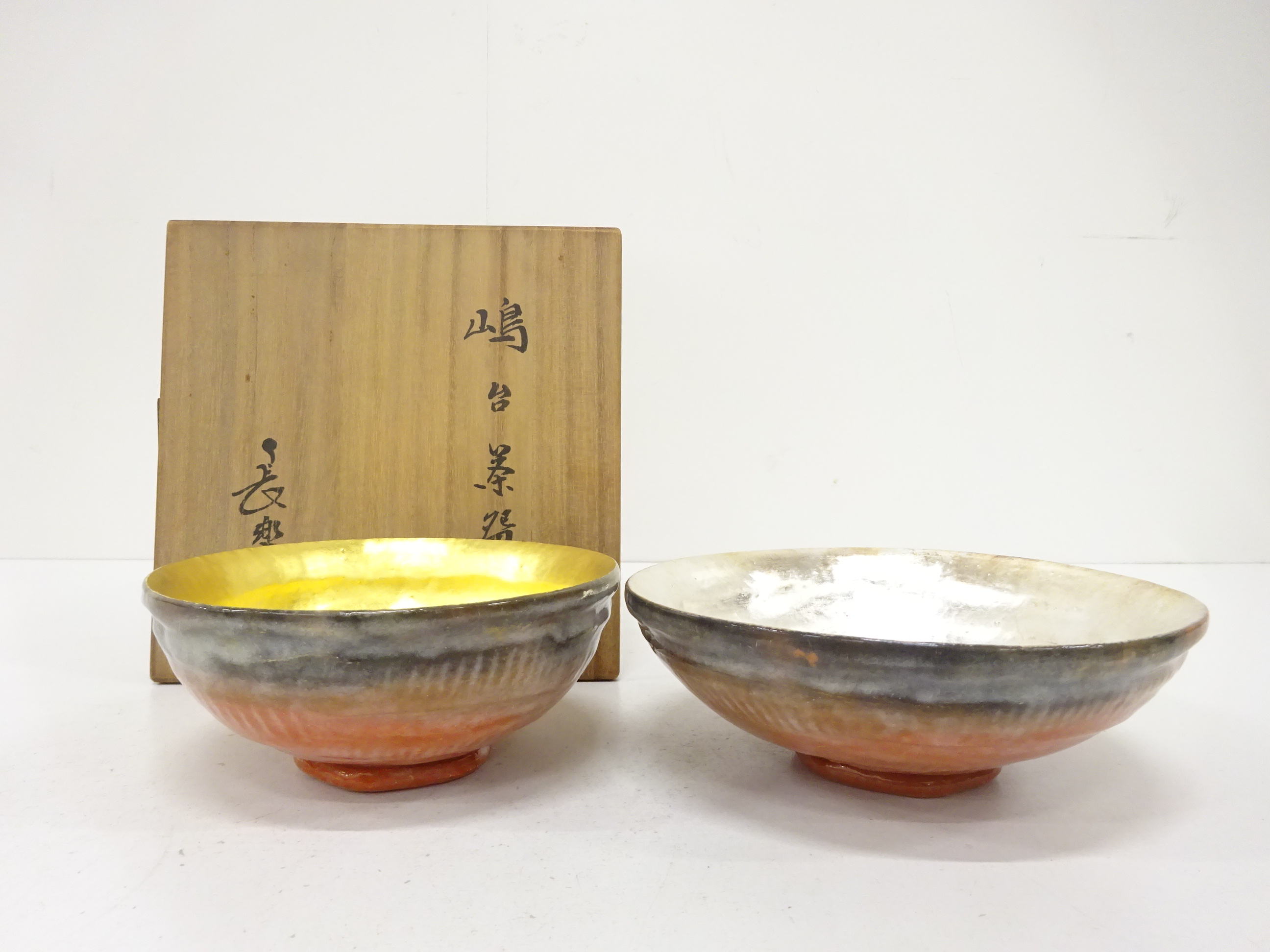
Excellent condition. Note : fragile. This item will be shipped as is (i.e. the same condition it was in when originally purchased from the antique dealer). * Items come with everything pictured (e.g. boxes, accessories, etc. if any).
* Please read through our store policy pages before ordering. Our store primarily sells vintage & antique wares.
Please understand that age affects both item condition and value as a collectible.
Check the condition in each photo carefully to help you decide whether to bid or buy.
If there is anything specific you would like to know about this item, please contact us.
Item Code:7637604
Size (cm)
サイズ
口径
高台径
高さ
縦
横
長さ
18
6
6.1
14.8
6
6.6
?Ask about this item
You must be logged in to ask a question.
Please log in and try again.
Ogawa Choraku
A line of potters currently in its third generation.
● Choraku I (1874 - 1939)
Birth name: Ohjiro
Second son of Ogawa Sayu Bahogan Minamoto Masayuki
Ohjiro came under the tutelage of Raku Kichizaemon XI (master craftsman of Raku ware) in 1886, becoming independent in 1904 by decree of the latter’s successor, Raku Kichizaemon XII. He later established his own Choraku kiln style in Gojozaka, Kyoto.
Ohjiro was given the name "Choraku" by Takeda Mokurai, the fourth generation head priest of Kenninji Temple in Kyoto. He also received the name "Choyuken" from Sen Soshitsu XIII (Ennosai), the thirteenth head of the Urasenke school of tea ceremony.
Choraku I was especially skilled at reproducing the works of Raku Kichizaemon XI and XII.
● Choraku II (1912 - 1991)
Birth name: Koichi
Eldest son of Choraku I
Koichi assumed the name Choraku in 1939. He was given the name "Keiun" the following year by Takeda Eisen (fifth generation head priest of Kenninji Temple). In 1943, Choraku II was designated the status of Preserver of Fine Art.
● Choraku III (1947 - present)
Birth name: Yukio
Eldest son of Choraku II
Yukio succeeded the family business after graduation from high school, producing under his birth name. He was awarded the Minister of International Trade & Industry Prize in 1984, and received the name "Shofuken" from Aso Bun'no (head priest of Daigoji Temple) in 1992.
[Raku ware]
Japanese lead-glazed earthenware, originally invented in 16th-century Kyōto. Quite distinct from wares that preceded it, raku represents an attempt to arrive at a new kind of beauty by deliberate repudiation of existing forms. The shape of the vessels is extremely simple: a wide, straight-sided bowl set on a narrow base. Because raku wares are molded entirely by hand, each piece expresses the individuality of the maker's hand; and pieces tend to be unique creations. The glaze colours include dark brown, light orange-red, straw colour, green, and cream etc.
Confirmation
Your question will be posted on the item page.
When answered, it will appear in the "Questions & Answers" section.
If the content is inappropriate, contains personal information, or is deemed unsuitable, it may not be answered or posted.